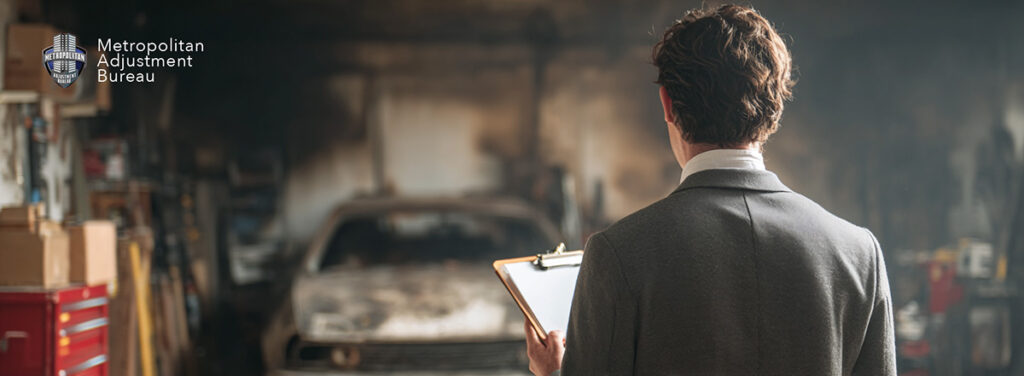
Fire and smoke losses often reach well beyond the area where flames were visible. Heat, soot, and airborne particulates move through attics, wall cavities, and ductwork. Even a small fire can affect insulation, wiring, framing, and interior finishes.
Many homes in Southern California have open attic channels, older framing styles, or mixed-material remodels, which create pathways for smoke to spread. A complete inspection includes surfaces that look untouched, because soot can settle on hidden structural components and porous materials.
How fire affects a home
Heat can warp framing, weaken roof structures, and damage electrical systems. Smoke often settles in areas that weren’t exposed to flames, including:
- Cabinet interiors
- Insulation
- Ductwork
- Closet walls
Public adjusters evaluate which materials can be cleaned and which must be replaced.
Smoke and soot behavior
Smoke creates residue that can discolor surfaces, embed in insulation, and affect mechanical systems. Ductwork, vents, and air returns often carry soot through the home. Proper cleaning or replacement, along with thorough deodorization, is essential for safe restoration.
Regional wildfire context
Southern California homes may also experience smoke intrusion from regional wildfires. Fine particulate matter can settle on surfaces throughout the home, even when the fire is far away.
What is the role of a public adjuster?
A public adjuster prepares a complete scope of repair that includes demolition, cleaning, deodorization, code updates, and reconstruction. They ensure that necessary steps, such as insulation removal or HVAC system cleaning, are documented and included in the claim.
Example
A small garage fire appears contained, but an inspection finds smoke in the attic and discoloration on the rafters. The insurer’s initial estimate covers only the garage. A public adjuster documents hidden smoke damage and expands the claim to include attic cleaning, insulation replacement, and odor removal.
Fire-related FAQs
How far can smoke travel inside a home after a fire?
Smoke moves through any open pathway, including attic spaces, wall cavities, ductwork, and gaps around plumbing or wiring. Homes with open attic channels, older framing styles, or shared mechanical systems often experience smoke movement far beyond the fire area. This can affect insulation, cabinets, and enclosed surfaces that appear undamaged at first glance.
What is considered structural damage after a fire?
Structural damage can include compromised framing, roof sheathing, rafters, support walls, and any component affected by heat. Even if flames didn’t reach a surface, high temperatures can weaken materials, and smoke can penetrate porous building components. Structural evaluations often expand once demolition begins and hidden charring or heat patterns are exposed. Learn more about your rights as a California policyholder.
Are wildfires and drifting smoke covered?
Most homeowner’s policies cover direct wildfire damage and smoke intrusion from regional wildfires. Even homes miles away from a burn area can be affected. Coverage details depend on the policy, but smoke, soot, and odor infiltration are typically included when properly documented.
Why are code upgrades important in fire claims?
Repairs must follow current building codes. Updates often include electrical improvements, fire-blocking, ventilation changes, and modern materials. These upgrades can significantly affect cost. If local codes require them as part of the repair, they must be included in the claim.
Can hidden damage show up after repairs start?
Yes. Once contractors start working, they may uncover soot behind walls, heat-affected studs, or insulation contamination. Supplemental claims can address this expanded scope.