
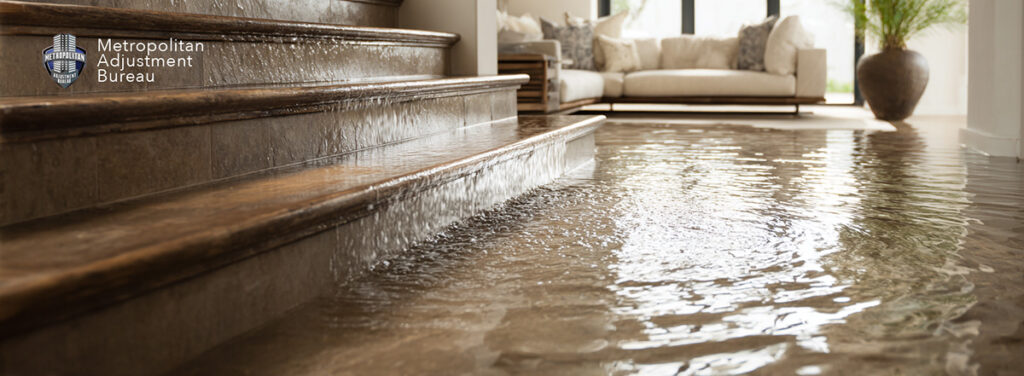
Water can move unpredictably through a home. It spreads under flooring, into subfloors, along wall cavities, and across ceiling spaces. Once moisture enters enclosed areas, it may remain hidden until demolition occurs.
Homes often have older plumbing systems, layered tile flooring, or flat-roof designs that complicate both the cause of the leak and the path of the water. Proper inspection is essential to avoid missing hidden damage.
Common types of water losses
- Burst supply lines
- Failed valves or fittings
- Water heater leaks
- Appliance malfunctions
- Roof penetrations
- Storm-related water intrusion
Each type has different implications for coverage and repair scope.
How moisture spreads
Water frequently travels farther than the surface staining suggests. It can move through:
- Tile underlayment
- Cabinet bases
- Subfloor systems
- Interior framing
- Insulation
- Shared walls
Public adjusters use moisture meters and thermal imaging to map the full area affected.
Roof leaks
Roofs with tile, torch-down, or flat designs (common throughout Southern California) often hide leaks until ceiling staining appears. Water can travel along rafters, insulation, or sheathing before reaching a visible area.
Mold considerations
Mold can begin to form quickly, especially in enclosed or humid spaces. Coverage varies by policy, but correct mitigation and documentation determine whether related repairs are included.
Example
A bathroom leak results in water pooling near the baseboards. A deeper inspection reveals moisture under the flooring, inside the adjacent closet, and beneath the tub platform. The insurer’s initial estimate includes a small repair, but the adjuster documents the full spread and updates the claim accordingly.
FAQs
How do I know if water damage is covered by insurance?
Coverage usually applies to sudden and accidental events like burst pipes, failed valves, appliance malfunctions, or storm-related roof leaks. Long-term seepage is often excluded. Distinguishing between the two may require moisture readings, inspection of materials, and understanding how the failure occurred.
How does water travel inside a home?
Water often moves under flooring, into subfloors, through wall cavities, behind cabinets, and across ceilings. Homes with tile, laminate, or engineered wood flooring frequently mask the spread. Thermal imaging and moisture meters are used to map the entire affected area.
Is mold covered by insurance?
Coverage varies. Some policies include limited mold coverage, while others restrict it. Mold growth can begin quickly in humid or enclosed areas, especially when water becomes trapped in insulation or behind walls. Proper mitigation and documentation determine how much of the repair is covered.
Are roof leaks covered?
If caused by a sudden event like storm damage, impact, or an unexpected failure, they often are. Many homes in the region have flat roofs, tile roofs, or older installations where leaks can spread widely before becoming visible. Determining the cause of the leak is key to coverage.
Why do water damage estimates vary so much?
Cost differences often come from missing moisture areas, limited demolition allowances, or outdated material pricing. Regional costs for flooring, cabinetry, and labor can also raise repair totals.